
A Gentle Man
Mike Hall

When he’d just passed his driving test, my brother Tim was ‘T-boned’ at an intersection on the Marylebone Road. Someone jumped the lights and smashed into the side of his car. He found a phone box (yes, it was that long ago) and phoned home. I was sitting with mum in the sitting room when she answered. She listened for a minute, then launched a flurry of questions: “Are the police there? ...Is he drunk? ...Is it a write off?” Eventually, Dad eased the handset out of her grasp and asked the glaring question: “Is anybody hurt?”
Some things you inherit from your parents, like it or not, and some things you learn from them: ways to behave and ways not to behave, values.
I wish I’d inherited my dad’s instinctive empathy, his generosity of spirit; I wish I’d inherited his wonderful, rich speaking voice, or strong forearms, or hairy chest; instead, I inherited his tuneless singing voice, his unruly eyebrows, and a certain mid-life, existential gloominess. Like it or not. But the things I learned from him, on the other hand...
His upbringing must have been extraordinary: he was eleven years old when the Blitz hit London. It must have been quite something to have to huddle at night in an Anderson shelter at the end of the garden, to live with fear, to emerge every morning and witness the damage and smell the smoke. Though it might have scarred a lesser man, dad, typically upbeat, had only this to say (from that radio play we started writing together): “Curiously enough, 1941 wasn’t a bad time to be a little boy; we listened to the bombs and the ‘ack ‘ack, we swapped our collections of shrapnel and cartridge cases, and we watched our boys win the Battle of Britain in the skies over our cricket field.” Even so, it must have had some impact on him. Though maybe not as much as his relationship with his father Henry Hall; not only distant and Edwardian, but also a celebrity. While grandpa (as I knew him) spent the war travelling around Britain, broadcasting daily, my dad was evacuated to a farm in Cornwall.
The farm was run by the ‘Boss’, whose influence on my dad was lasting; I think on some level he spent the rest of his life trying to be as practical, and handy, and self-reliant as this old-school farmer. Not to put too fine a point on it, the Boss became a father figure. Twenty-five years later, dad took my brother and me to Cornwall to visit, and we met the great man himself; old by then, but still formidable. I was very young, and we only stayed a couple of weeks, but during that time I remember being chased by a pig, watching a cow give birth, being fed a huge glob of honeycomb (possibly to stop me asking so many questions), drinking milk that was udder-warm, and marvelling at a whirring, airplane-sized combine harvester as it carved swathes through fields of wheat. No wonder those distant summers living there had shaped dad.
Once the war was over, grandpa continued touring and dad was sent to boarding school, from where, aged eighteen, he went up to Cambridge University to read Maths. Remarkably, he soon changed streams from Maths to English and also became involved in amateur dramatics. I guess that made him a polymath. All well and good, until he graduated, only to discover that, unfortunately, polymathery didn’t offer a linear career path.
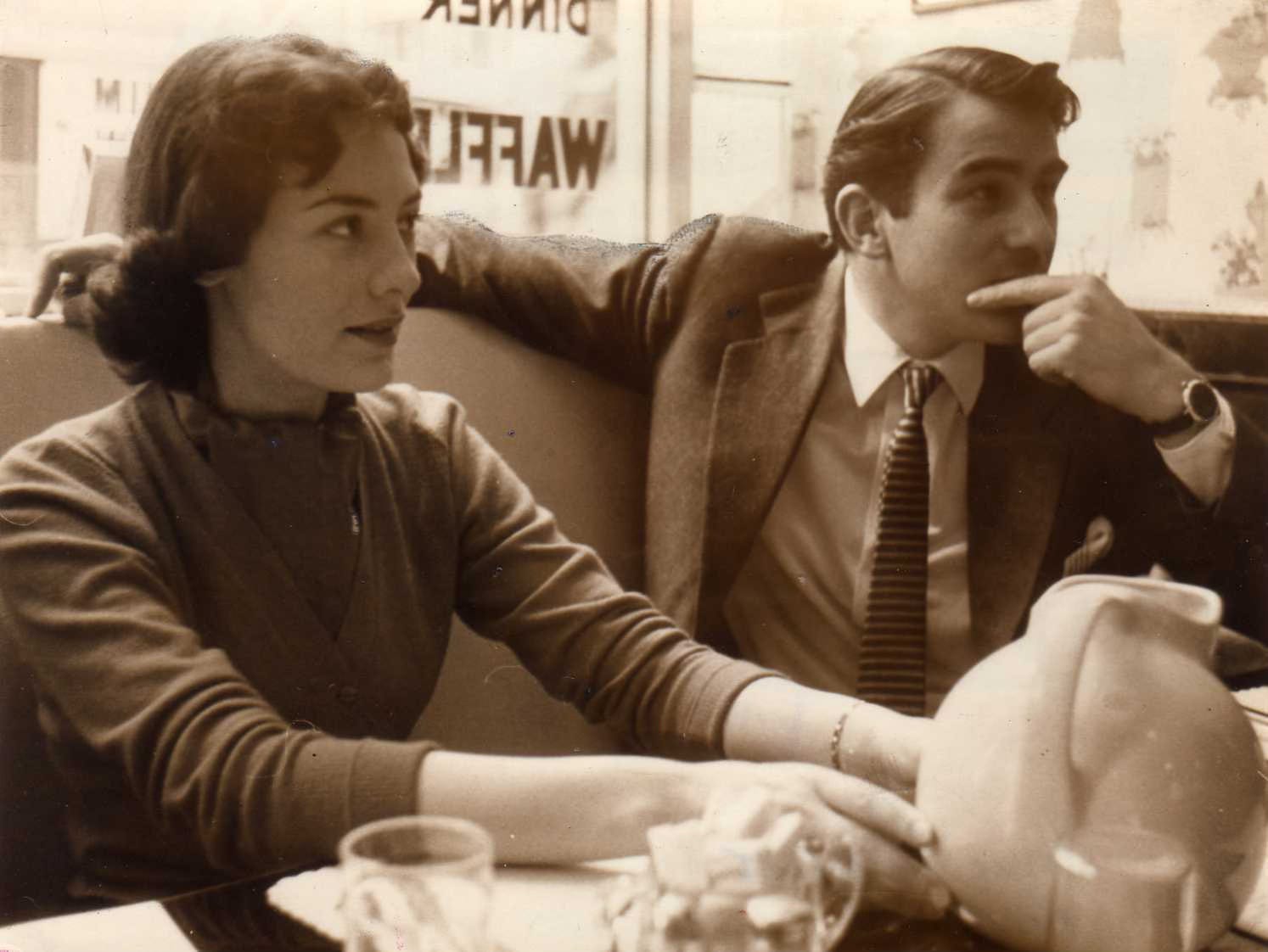
The trouble with researching dad’s twenties (the 1950’s) is two-fold: first, it was the time in his life before I was born, so I have no personal references, no context; and second, it was a long time ago and there’s no one left to ask. But from what I can gather from family lore, and some newspaper cuttings (Henry Hall was so famous that even his son’s comings-and-goings were mildly newsworthy), his twenties were spent trying to figure out what he was going to do. Like father like son. Or maybe everyone spends their twenties trying to figure out what they’re going to do.
At the same time as picking up supporting parts in plays (eg. Sir Toby Belch in Twelfth Night) and performing his own act at the Players Theatre in London (a pastiche Victorian Music Hall), he was also working for Henry Hall Enterprises helping to book venues and talent for his father’s Guests Nights. So, by the time he was in his mid-twenties, although he still didn’t have a clear path forward, he did have some great contacts and some production experience. Enough, anyway, to start putting together his own, small, touring, review-style shows featuring comedy, songs, and specialty acts (ventriloquists, impressionists, acrobats, magicians – think: Britain’s Got Talent). In this enterprise he partnered with his old friend (and my future godfather) Johnny Hewer.
From touring variety shows, Hewer Hall Ltd soon transitioned into staging sales conferences, one-off spectaculars to launch new products and motivate the sales forces of the likes of Mobil Oil, Wilkinson Sword, and IBM. Although the idea was already big in the US, they were the first in the UK to use “show business for business.”
Hewer Hall flourished and lasted throughout dad’s thirties, until a couple of things torpedoed it. First of all: slow payments. In dad’s words: “the bigger they are, the slower they pay.” It combined two things he hated: bullying and ‘sharp practice’. Exactly the same thing happened to me in my twenties and thirties: I started a business in an industry for which I had some knowledge and passion (cricket), and developed a brand that became well-known and well-thought of, but it was the business-side that did for us: negotiating, networking, collecting payments... I thought I’d be okay at it and I wasn’t. Like father like son.
Nor did it help that dad’s partner Johnny Hewer became less and less involved, distracted by something that started as a side-hustle and took over his life. With a white beard, a twinkle in his eye, and a pirate-style, west country accent, Johnny was chosen to be Captain Birdseye in a national advertising campaign and soon became a ‘household face’. In fact, at one point he was named in a poll as the second most recognisable captain on the planet - after Captain Cook. As such, the demands of the role became more and more time-consuming, and he spent less and less time at the office.
In the meantime, when dad was thirty, he married mum (who was twenty-five), and my brother Tim and I soon followed. Whereas in our early years, dad’s nine-to-five at the office, besuited and briefcased, seemed a sensible counterpoint to mum’s perilously uncertain career, circumstances eventually changed. As it turned out, with dad’s support and guidance, mum’s career flourished, and with enough money in the bank to finish Tim’s and my educations, and the mortgage paid, it was time for dad to take what he’d learned at Hewer Hall and apply it elsewhere.
A natural progression from sale conference extravaganzas, he next tried his hand at producing plays and musicals in the West End. With mixed results. Along with lifelong friends Barry Brown and Fritz Holt he backed the original West End production of Gypsy, starring Angela Lansbury and Bonnie Langford. It was a short-lived hit. The same cannot be said of Norman is That You? starring Harry Worth, a cringy farce, tracing a clumsy journey from antisemitism and homophobia towards acceptance, as demonstrated by the final scenes in which Norman joins the navy and his previously homophobic Jewish parents invite his previously anti-semitic boyfriend to come and live with them.
Now well into his forties, and perhaps with his producer’s fingers burned, dad returned to performing, and his first stop was the Players Theatre, the retro music hall where he’d performed as a younger man. However, this time he returned as the Chairman, the gavel-wielding Master of Ceremonies who’d introduce the variety acts: “My Lords, ladies and gentlemen, for your entertainment and edification the Players Theatre is pleased to present the exquisite vocal stylings of...” I watched him many times - in fact I worked behind the bar - and he was fabulous, utterly inhabiting the role. Now, I love my dad, loved him and love him still, but I’m not convinced he was a great actor. In fact, I think one of the reasons why he excelled as the Chairman was that the persona is intended to be broad, a caricature... Overacting was de rigeur. To settle the audience back into their seats after the interval, he did some crowd-work: seemingly off the cuff, but, in fact, well-rehearsed (“From Australia? Welcome, sir. And how does it feel to be the right way up?”) followed by his set-piece: a long, exquisitely-crafted joke that included meanderings, diversions, and distractions. Dad was a master, and everyone’s favourite Chairman.
Able to dip in and dip out of working at the Players, he also did a few seasons with the Royal Shakespeare Company, carrying spears and delivering lines like “My Lord, the princes have arrived.” He picked up bit parts in TV’s Poldark, and a brand new C4’s show called Anything You Can Do, a kind of forerunner of modern ‘structured reality shows’, in which he played the father who moves in with a newly married couple (his on-screen son and daughter-in-law) and helps do up their house: domestic drama meets DIY. Separately, he even snagged an AT&T advert in the US where he played the old man (in heavy make-up) who made the audience well up when he clumsily stabbed out his granddaughter’s number on phone and surprised her with a call from across the pond.
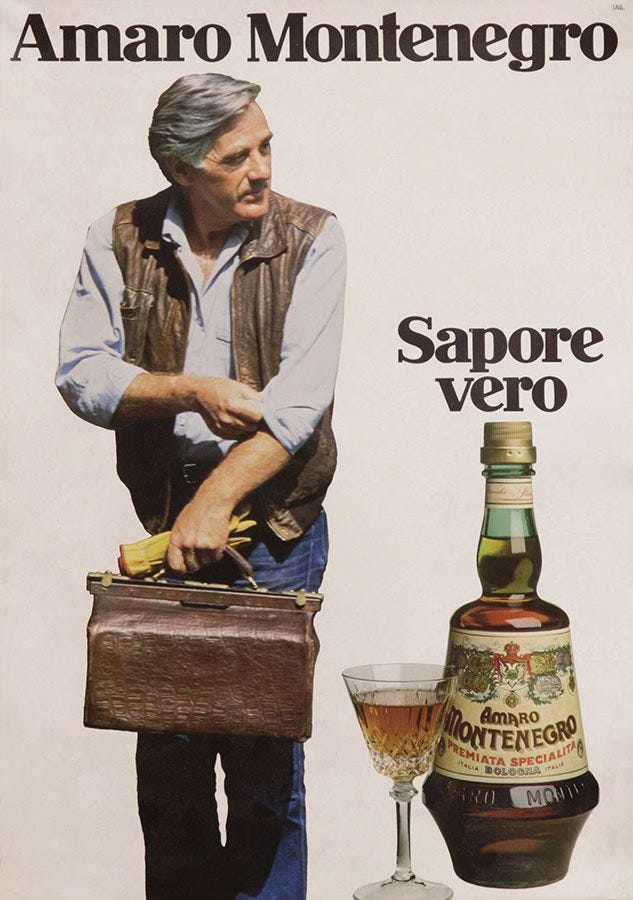
Finally, aged 50, he got a dream gig: working six weeks a year for a decade making a series of beautiful. multi-award-winning adverts (cinema, TV, and print). Not only was the money good, but his face became so synonymous with the brand that after ten years he was being paid as much not to appear for any competing brands as he was for the adverts themselves. God bless exclusivity clauses! He played a ruggedly handsome vet who drove his beautiful old Italian motorbike through idyllic countryside, here and there saving cute, photogenic animals, and winding down at the end of the day with a glassful of Amaro Montenegro liquor. According to dad, it tasted like weird, sweet tar, but hey-ho! The job was fun, and easy, and well-paid, and considerably better than his original understanding of the part which was that he was to play a Veg; he wrote to me (I was in Mexico) that he had visions of having to cavort around a studio dressed as an aubergine. The campaign was eventually cancelled when Sicily decided that the TV vet saving a bird of prey from a poacher’s net was actually a dig at their (now illegal) tradition of trapping and roasting songbirds. They took to their piazzas and smashed all the bottles of Montenegro they could find. Nevertheless, to this day I can still conjure up immediate reflected celebrity status with Italians (Sicilians apart) by reciting the advert’s slogan: “È duro il lavoro, ma... l’ho scelto io.” (The work’s hard... but I chose it myself).
That was dad’s career, inasmuch as it can be called that. It mostly involved changing stream every ten years or so. Again, like father like son (in my case, from property, to cricket bats, to writing, to candlemaking). But dad’s career was perhaps the least of him; it was what he did, not what he was. He was like one of those civilisations that left behind no great stone monuments; sophisticated, cultured and complex, but only skimming the surface of life, like W.B.Yeats’s “long-legged fly upon the stream.”
By the time the Italian adverts were cancelled, dad was in his early sixties, which is how old I am now, with maybe twenty-five or thirty decent years to go (if I’m lucky), three decades that my dad spent marking time, tinkering on the fringes of his beloved theatre: more bit parts; some understudying; stage managing a tour or two; travelling with mum to America.
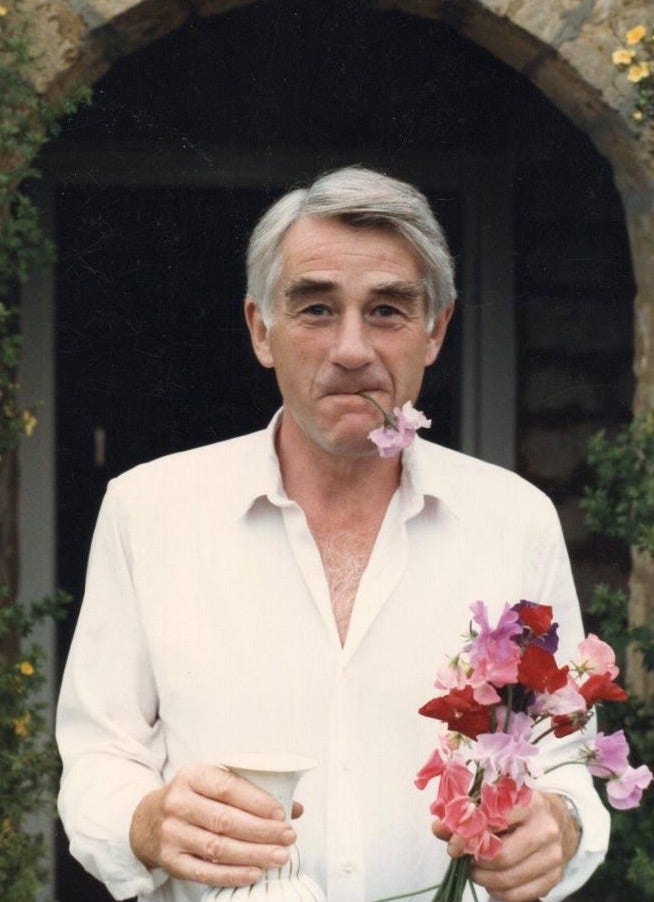
In the mid-eighties, mum and dad lost much of their retirement nest egg on an investment (someone who claimed to be building strip malls in the USA and offering a return of 15%) that epitomised the concept that if something seems too good to be true, it probably is. As a result, at a time in their lives when they’d assumed they wouldn’t have to worry about money, they had to rent out the family house. Meanwhile, mum went to America to work (starring in the musical 42nd Street on Broadway, a part in the ensemble cast of a TV adaptation of Agatha Christie’s Sparkling Cyanide, a guest appearances on McGyver and a regular gig on a daytime soap called Capitol) and dad rented a cottage in the middle of a working farm yard in Somerset. Echoes of the Boss in his childhood. Surrounded by lowing, and the clatter of hooves on cobbles as the cattle were driven from barn to field, and mud and muck, he dedicated himself to DIY and a bit of writing, and a lot of gardening. It was also in a back room of that farm cottage where the very first Millichamp & Hall bats were whittled. As the years went on, he did less DIY, but stuck with the gardening, eventually transforming the little walled garden of the cottage into a paradise (a revelation to the farmhands who had watched him as he’d paced around, mumbling to himself as he put pegs in the ground and strung twine between them; “We thought you were practising your acting,” said farm manager Headley, in his heavy Somerset burr). Some years later, my friend Giff survived a couple of brutal rounds of cancer treatment, and as part of his therapy he was told to try meditation, part of which involved picturing a ‘happy place’. He chose dad’s idyllic, farm garden. I remember how happy dad was when I told him. Perhaps that was the kind of monument he left behind: happy places.
Dad spent a few years DIY-ing and writing and gardening in Somerset, waiting for mum to come back from America, and in the meantime they permanently downsized in London; selling the family home, and with the proceeds buying a two-bedroom mews house and a holiday house in Spain. It was a new century and dad was now in his late early seventies.
The house in Spain was in pretty good order, with no need of DIY, so instead he turned his energy to building a kind of folly in the part of the garden separated from the house by a hedge that the family referred to as ‘the lower acres’. The folly was made of blue-painted, wooden posts and poles; a trellis-y, pergola-y, arbour-y construction, patchily covered with climbing and trailing plants. But hot-weather gardening did not turn out to be his strong suit. He went through periods of over-watering, then under-watering (“survive or die”), and the plants never really took. The lower acres were never, I fear, anyone’s happy place.
If Spain didn’t bring out the inner Mediterranean garden visionary in him, it did bring out the inner naturist and the inner painter. When he was alone, or when mum was visiting, he’d set up his easel in a secluded corner and paint. He’d start in shorts and a t-shirt, but as the day got hotter, he’d punctuate his painting sessions with naked dips in the pool, then return to work without bothering to re-dress. Quite a thing for a son to drop by unannounced and stumble upon!
He continued painting in both Spain and London (fully clothed) for the rest of his life. He loved it, especially oil painting, and could lose himself in it. He read about it, went to art classes and exhibitions, and had painting friends. However, and I hate to say this about him, I never thought he was very good at it. Of course, now I wish I could have set that aside – after all, what did it matter what I thought? – and told him what I know he’d have wanted to hear. I’m sorry for that. Mum, on the other hand, loved his paintings: flowers, still-lifes, landscapes; always colourful. It was people he wasn’t so good at. Infamously, among his framed paintings on the dining room wall was a portrait of his beloved grandchildren: Dan and Tom. And to be fair, it wasn’t a bad likeness. Except... on his left hand, Tom had six fingers. I took mum aside and whispered it to her and by the next visit it had been fixed. All the same...
In the background to all his other hobbies and pastimes, he always wrote; letters, cards, funny poems, songs, skits, monologues (one that was read on Radio 4). And he was a great writer, a natural. Maybe it came from his love of language. He was encyclopaedic about Shakespeare, one of those people who always seem to know the ‘next line’, not just the famous ones, but also the context. If someone were to say “All that glitters is not gold”, not only would he not dream of correcting them (it’s “glisters”), he’d be likely to amplify the quote with “Gilded tombs do worms enfold.” He loved language, but not in a highfalutin way; he didn’t revere it. He just used it beautifully, and precisely, and playfully, and admired other people who did. And his enjoyment wasn’t confined to fancy words. In fact, it seemed to particularly tickle him to use words and phrases that were slightly quaint; throwbacks to his theatre touring and University days. He’d say “use your bonce” for use your head, “rugger” for rugby, “Harry-champers” for champagne, and “digs” for lodgings. “Charlie Farnsbarns” meant what’s-his-name. Inexplicably, he’d occasionally say, in a generic foreign accent “Zis is no way to be’ave!” He used the word “bugger” particularly creatively; from people “playing silly buggers!”, to declaiming “Julian, you bugger!” about my cricket-bat-making partner who hadn’t put something back where he’d found it, to describing the female lead in a screenplay I’d written as “a bugger of a part!”. He was right, by the way; I rewrote it.
The only time I ever remember feeling he might have misspoken was at their fiftieth wedding anniversary. Their sons (and wives) and grandsons had all gathered to celebrate, and after the meal dad made a speech that ended with him saying “It fills my heart to see that the Hall boys have all followed my lead in marrying above their worth.” The Hall boys exchanged glances: had we just been dissed, or had our womenfolk been complimented? Perhaps in the end it said more about how he saw himself than it did about Tim and me.
Anyway, I always thought he should have written more and painted less. He had a ‘voice’; never pretentious or affected (which he’d have dismissed as “clever clogs”), and never aping anyone else. But he didn’t write enough and never challenged himself to write, say, a novel. He said he didn’t have anything to write about. He did write a play - The Best of It - a rather old-fashioned, light farce about a married couple that was a thinly disguised version of his own life. The last thing he wrote was a wonderful, biographical, one-woman-show for my mum - Something to Sing About – that she managed to showcase just a couple of times before finally retiring.
It’s not too much of a stretch to say that I started writing to make him proud. He was the first person to whom I showed my initial efforts, and I remember him physically squirming as he struggled to make his feedback encouraging. I think it’s fair to say he never loved my prose. But he did like my scripts. He (and mum) even starred in an episode of Doctorsthat I wrote specially for them. But I’ll never forget how tightly he hugged me after the Solo! premiere and murmured in my ear how proud he was of me. I mean, he’d told me many times before that he was proud of me, but half the time I hadn’t believed it. Or rather, I knew I hadn’t deserved it: some minor sports achievement; an exam I should really have done better in... All the same, I’m sure he always meant it. And now, since he’s gone, I’m starting to realise all the times I could have told him I was proud of him. Should have.
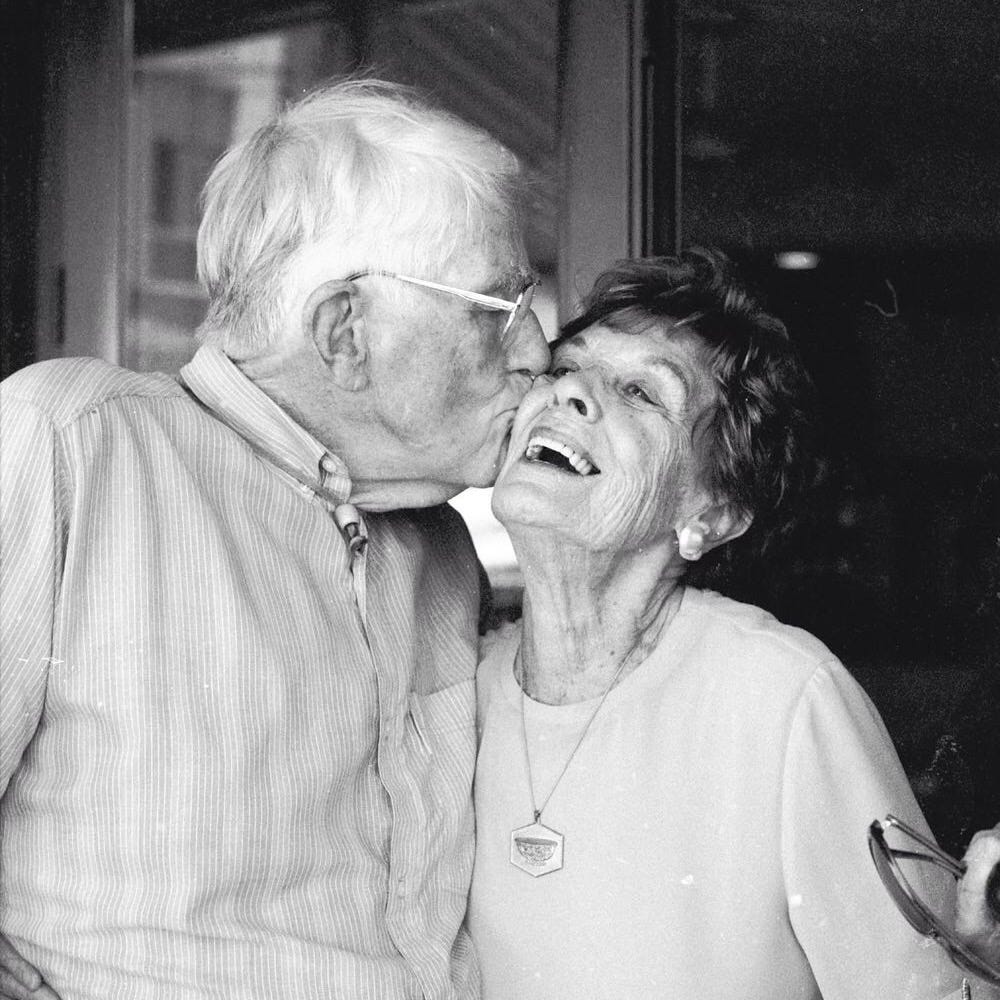
Acting, producing, writing, gardening, painting... Dad tried lots of things in his life, but he dedicated himself to only one: my mum. They were married for sixty years. When he was in hospital with covid, he called me (and Tim, separately) to say he was dying; very matter-of-fact, maybe a kind of bravado, but maybe because he didn’t want to make a fuss (very dad). Almost his last words were “It’s mum I’m worried about.” I promised we’d look after her.
You might say that dad’s utter, lifelong devotion to mum meant that he sacrificed his own ambitions. But it may also be true that he simply wasn’t an ambitious person; perhaps a reaction to his own father’s single-minded aspirations and success. Either way, there came a point in his life when dad started to question whether he’d made the most of his privilege and advantages and he went through bleak periods. Although that’s only my judgement, looking at it through the prism of my own life. It seemed to have first happened when my brother and I were kids, and dad was in his forties – the ‘office years’. He even went to our family physician Doctor Horder and was prescribed medication. I guess it was a kind of depression. I knew nothing about it at the time. It was only when mum told me about it, years later, that I recognised some of his behaviours. I, too, in my forties and fifties, skirted the shadows. Like father like son. I was happy at home but haunted by the feeling that I’d missed some great opportunity, that I’d underachieved.
The fact that he kept his depression from Tim and me was typical of him and was one of the hallmarks (no pun intended) of a good father: strong, dependable, even and considerate; never erratic, or selfish, no temper. I never saw him drunk. This was a man who once called rudeness “the initial violence.” Although, as he got older, he did get crankier. He’d never had time for anything that he thought was over-the-top, or ‘look-at-me’, or wasteful, but as he got older he got more vocal about it. Technology, too, could send him into a rage. He found it inexcusable that his computer couldn’t tell that he’d meant a dot when, in fact, he’d typed a comma. His inability to master any kind of tech meant he was never able to send emails. Nor was he ever, in later life, able to access YouTube’s million-and-one painting lessons and folly-building tutorials. Such a shame.
In fact, his last decade or so was blighted by shingles, a frivolous-sounding name for a ruinous disease. Shingles attacks the nerves from the inside out. In his case, it eventually erupted in the crown of his head, resulting in stabbing pain episodes that left him gasping in pain and miserable. Healthy, he’d have been a great old man (“old boy” as he called them), dispensing wisdom and sharing his experiences. I still feel cheated; I missed that and I miss him.
I like being me, I’ve got used to it. There’s no one else I’d want to be. Except maybe him. A gentleman and a gentle man.
* Thanks to Kevin Dearinger (an honorary Hall) for sharing lots of memories and newspaper cuttings *
If you’ve enjoyed reading this, do, please, please, please SUBSCRIBE (you can always unsubscribe with a single click if you don’t like the next one!) (you will!).
My algorithm thanks you!
Lovely piece. Thank you. I also thought lots about my dad while reading.
An extremely enjoyable read .